Brett Holverstott

The End of Fire

Hydrino Energy and the Future of Physics

Get the book

“A scientific page-turner that you can’t put down. Never thought I would say that about a book about physics.”

Chris Henry · reader, 2016 edition
More from readers

The premise

The solution to climate change is here. The backstory is 35 years of science and engineering.

Charles Darwin remarked that next to language, the discovery of fire was the greatest ever made by man. Yet its use has dealt a devastating shock to the Earth. For 200 years we have accelerated our use of fossil fuels.

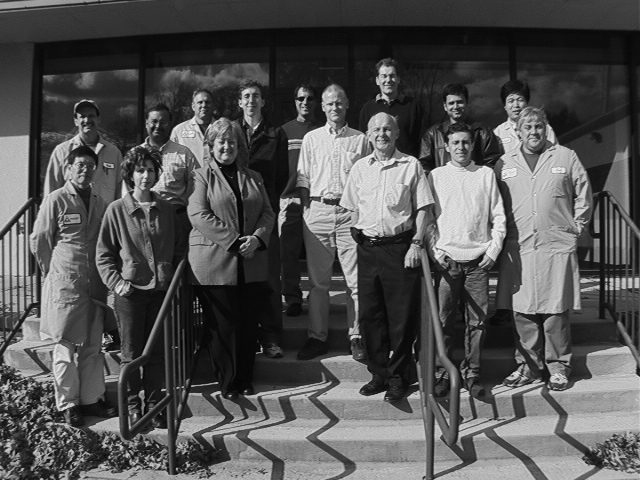
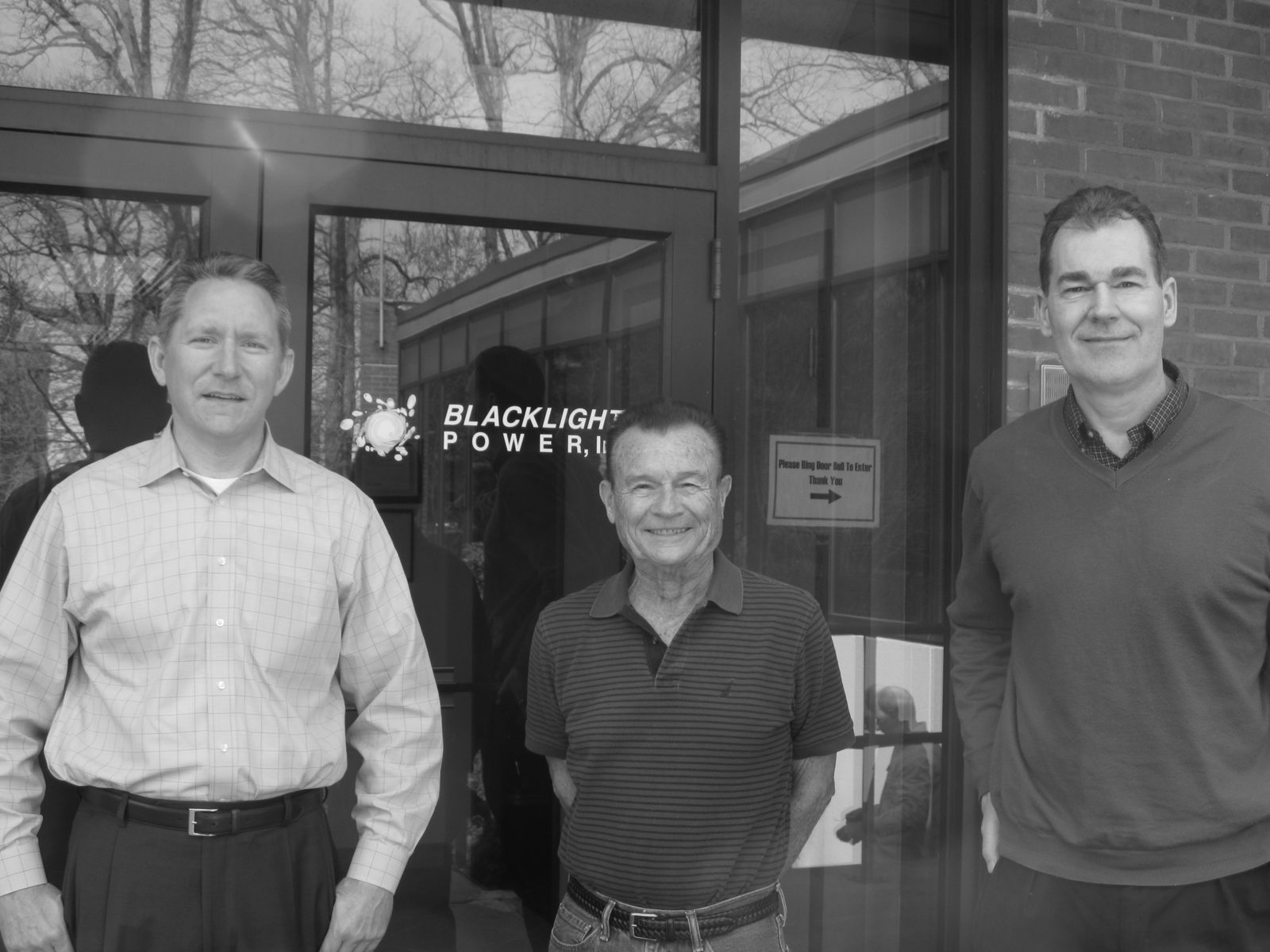
The End of Fire is the only comprehensive account of 35 years of scientific research, engineering by Randell Mills and his team at Brilliant Light Power, who have pioneered a new form of hydrogen chemistry, and unveiled a reactor able to sustain it. The result is a light source as hot as the sun, able to produce carbon-free power. It will allow us to decarbonize in a decade. This book is about the story of the invention of the SunCell and the incredible science behind it.

Look inside

Flip through the cover and the opening of Chapter 1. The full book is softcover and Kindle.

Loading pages…

Swipe sideways to turn the page. The page itself scrolls as usual.

Opening…

Get the book

Revised and Expanded Edition by Brett Holverstott. Illustrations by Matt Schmidt. Softcover and Kindle.

Available now →

Topics in the Book

Key subjects from The End of Fire, with links to chapters and related podcast episodes.

Randell Mills

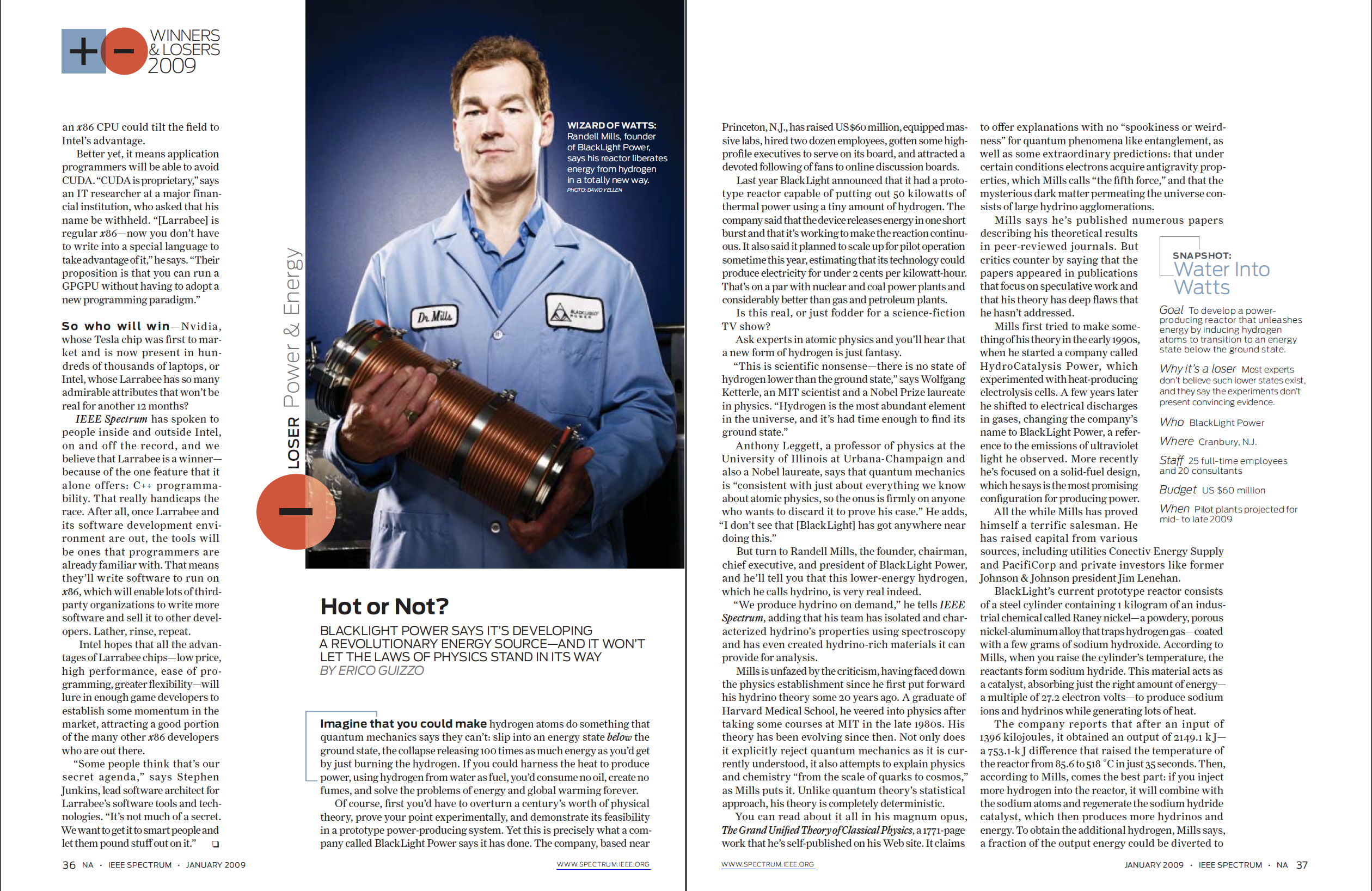
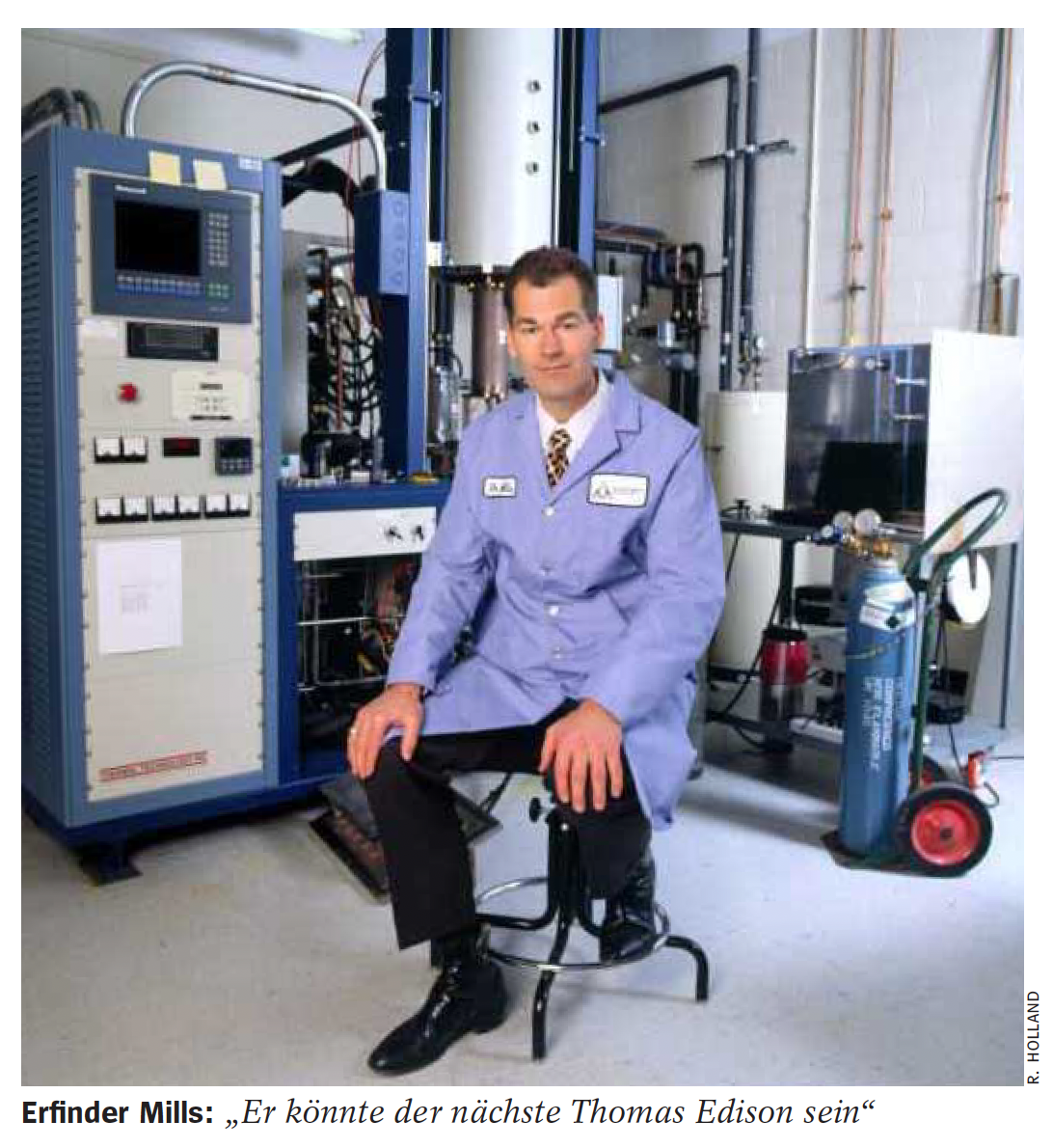
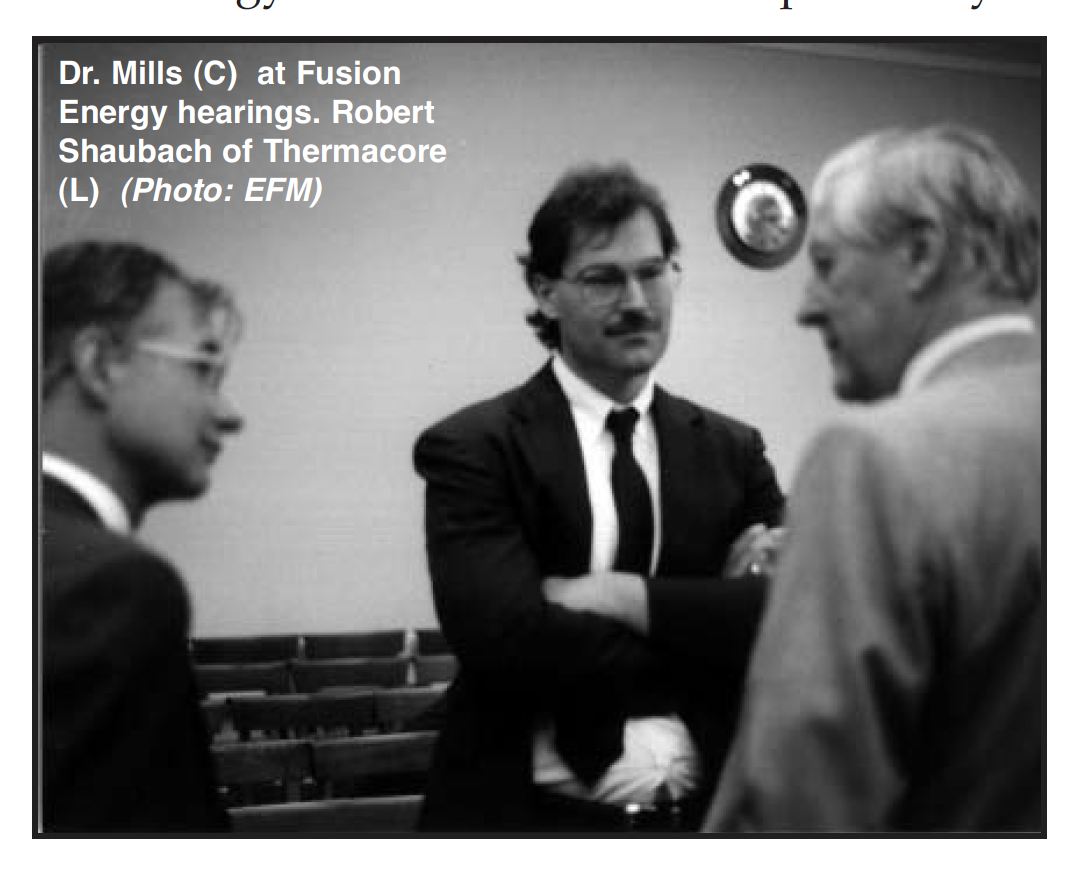
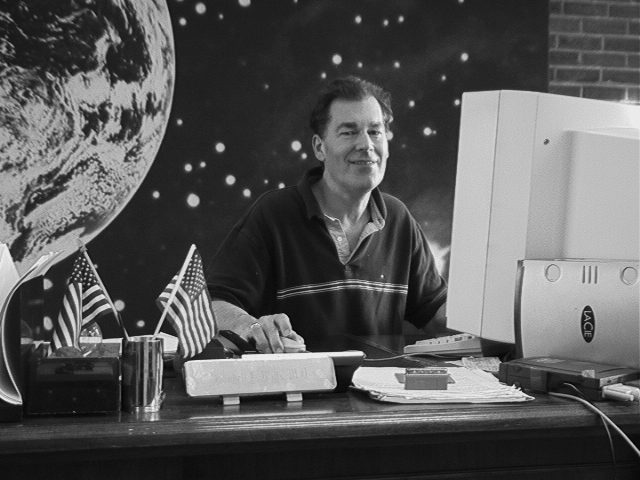
Randell Mills grew up operating a farm. He studied at Harvard and MIT, specializing in innovative medical technologies, including a low-dose radiation cancer therapy that earned him an article in Nature. After a professor inspired him to look at the atom in a new way, he went on to leverage his talents as a theoretician, experimentalist, and engineer to usher in a scientific revolution.

Early Atomic Theory

From the discovery of the electron until about 1915, scientists sought a “classical” model of the electron, one that leveraged the known laws of physics, such as electrodynamics and mechanics. Then, everything changed with quantum mechanics. Yet, over the course of the 20th century, physicists continued to explore classical extended models of the electron, until a breakthrough in 1986 paved the way for Mills’s new model.

Atomic and Molecular Physics

Mills’s theory unravels the architecture of atoms and molecules. These are no longer fuzzy blobs — they are elegant spherical and ellipsoidal shells. Complex interactions between electrons are now straightforward math.

Experimental Confirmation of the Hydrino Reaction

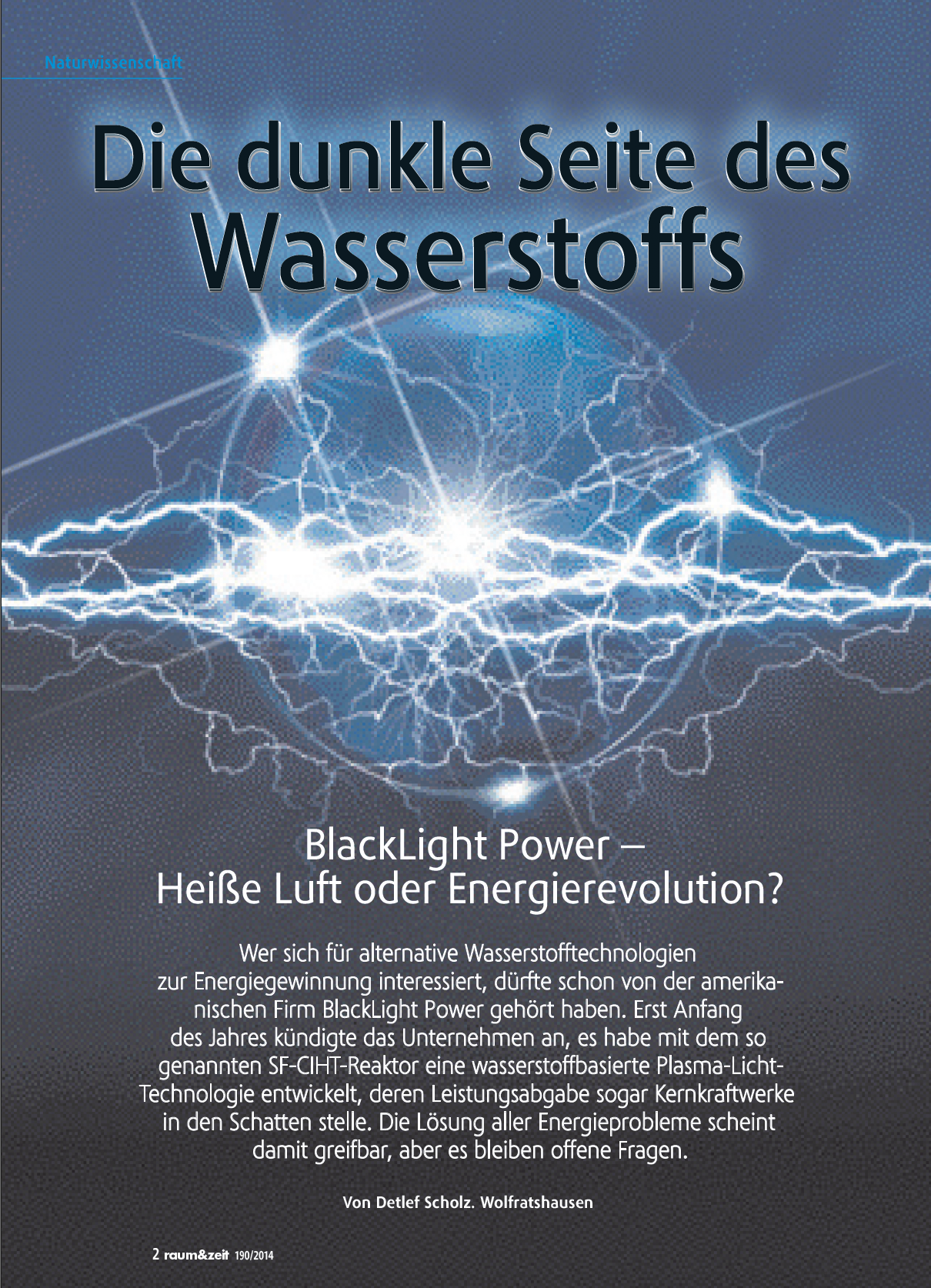
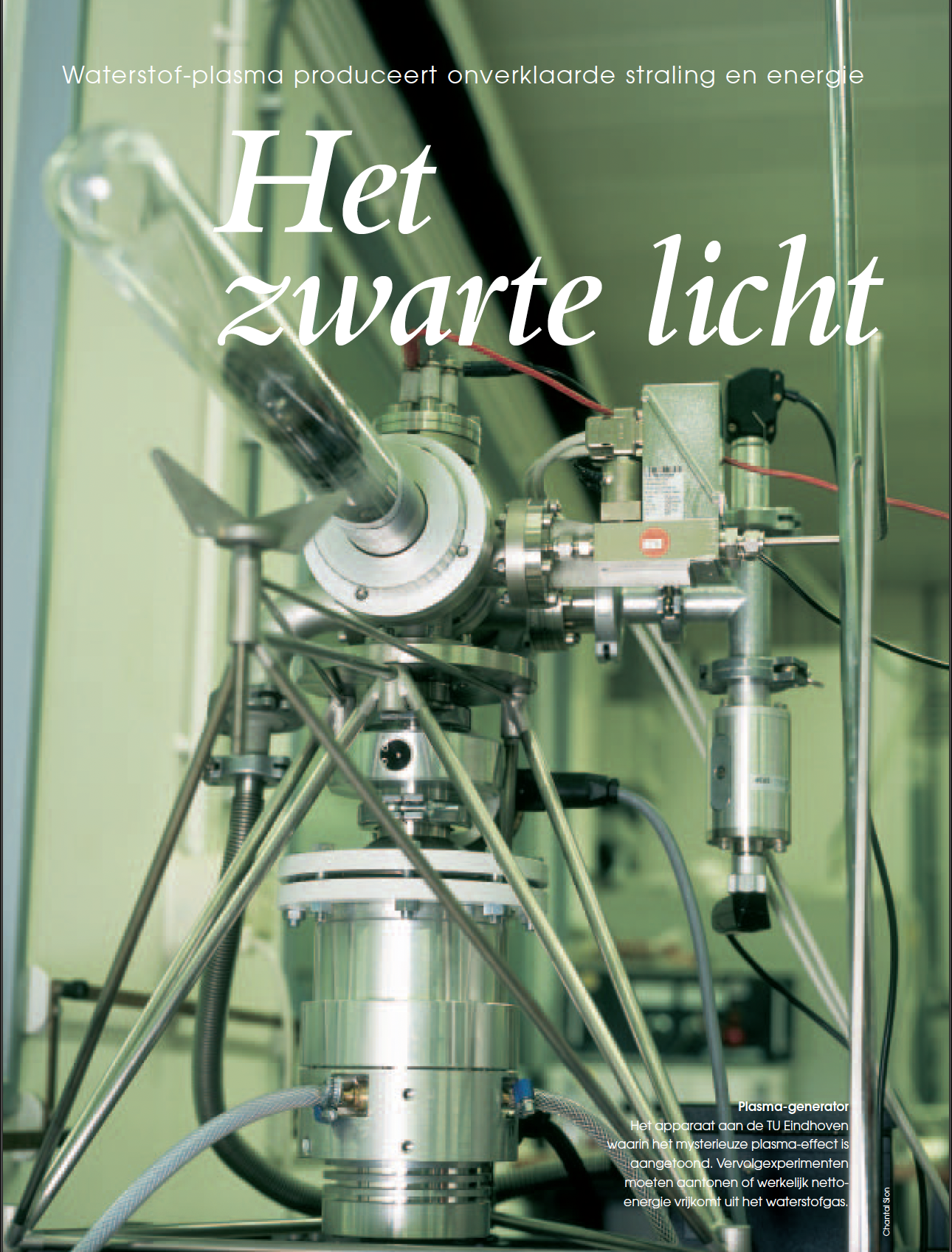
From 1995 onward, hydrino experiments became gas-phase reactions. These produced a beautiful glow along with the emission of extreme ultraviolet (EUV) light and unusual plasma characteristics that were evidence of the hydrino reaction. Important collaborators include Jonathan Phillips, Peter Jansson, Johannes Conrads and Gerrit Kroesen, Rowan University, GEN3 partners, Nick Glumac, W. Henry Weinberg, and Fred Hagen.

The Engineering of the SunCell

In 2014, there was a breakthrough: hydrino reactions became explosive. The subsequent series of rapid reactor prototypes led to a continuously-operating boiler technology in 2021, before Mills committed to developing a universal, light-emitting cell that would generate electricity by directly illuminating solar panels.

Solar Physics

The Sun has numerous mysteries. Its atmosphere appears too hot; explosive events on the surface emit EUV and X-ray light, as well as the neutrino imbalance, and solar “sparkles.” The hydrino reaction may explain all of them, and provide a pathway for up to 60% of the Sun’s power.

Dark Matter

90% of the universe is hydrogen. What if the missing 80% was also hydrogen? Hydrino gas offers a compelling solution to the dark matter problem. It explains EUV emission lines from space, the ionization of the interstellar gas, and X-ray emissions. Hydrino molecules match hundreds of diffuse interstellar bands (DIBs). We see them from all directions simultaneously.

The Quantum Quagmire

A new model offers a radical interpretation of fact. Mills’s model allows us to rethink quantum double-slit and entanglement experiments. Quantum mechanics is also challenged by an experiment in which free electrons are trapped in liquid helium — confirming Mills’s model of the electron.

Space Propulsion

In 1996, NASA approved a grant to test hydrino plasma for rocket propulsion. The results were favorable, but preliminary. Now Mills’s physics offers new possibilities: a space drive, a way to build a sub-light “warp” drive.

Black Holes

Mills’s theory gives us new insight into what is happening at the center of black holes. It also reveals their ultimate fate, and the origin of gamma ray bursts (GRBs). Mills’s physics also explains “black hole jets” that shoot away at high speed.

Dark Energy

Mills’s new particle physics offers a stunning prediction — the universe expands and contracts, with no Big Bang. It is driven by the release of matter as energy. Mills’s model was confirmed in 1998 with the discovery that the universe is accelerating in its expansion, and it is further confirmed as we look into the early universe.

The Philosophy of Science

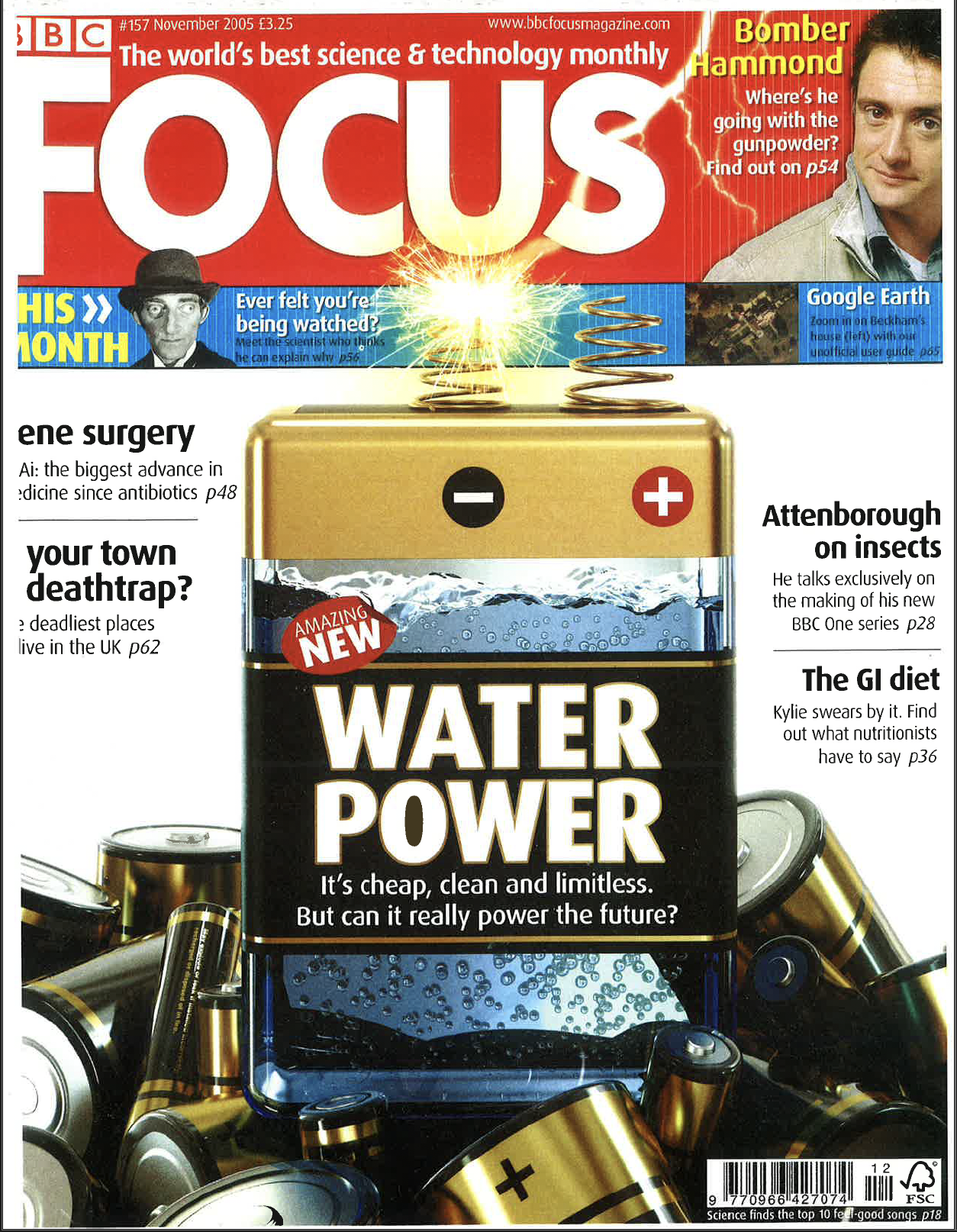
Mills has been looked at with suspicion for decades; yet this is a normal symptom of revolutionary scientific change, what Thomas Kuhn called a “paradigm shift.” Mills’s work also offers a scientific realist view of perception and knowledge that almost buckled under the quantum century.

Profane Science cover

Profane Science

Profane Science is a reader-supported series of podcasts derived from topics in The End of Fire. Subscribe, or listen for free. Available on Substack or Spotify.

Listen to the Chapter 1 audiobook →

What readers say

Reviews of this edition and of the 2016 book, Randell Mills and the Search for Hydrino Energy, run strongly positive. Readers come back to the same points: the physics is difficult, the telling is clear, and the story is hard to put down. On Goodreads the first edition averages 4.56. Public Amazon reviews of the 2025 edition are five stars.

“This book is exceptionally well-written. Holverstott takes extremely difficult concepts and makes them understandable even to the layman. The science is welded together with interesting stories.”
Chris Henry · Goodreads, 2017 2016 edition
“A very well written history of Randell Mills’s decade-long journey and how it could change our lives. One of the most interesting books I have read in many years.”
Pamela S. Gray · Goodreads, 2018 2016 edition
“An excellent review and update of the latest SunCell developments, the technology, and Dr. Randell Mills’ atomic theory. Absolutely stunning!”
Dan Evans · Amazon, May 2025 5 stars
“An amazing story and explanation of the new groundbreaking SunCell, and of the classical physics that made it possible.”
Jeff Bain · Amazon, April 2025 5 stars
“A very well-written book. To this educated layman, Holverstott makes a compelling case for Mills’s theory of hydrino energy.”
Howard · Amazon, April 2025 5 stars
“A monumental effort… at once a science history treatise and a business mystery story… that doesn’t shortchange the intense complexity of the scientific material.”
Kert Davies, Climate Investigations Center foreword

Readers of the 2016 edition on Amazon also called it highly informative, written with little math, and “mandatory reading for all young scientists.” Sources: Amazon, 2025 · Amazon, 2016 · Goodreads.

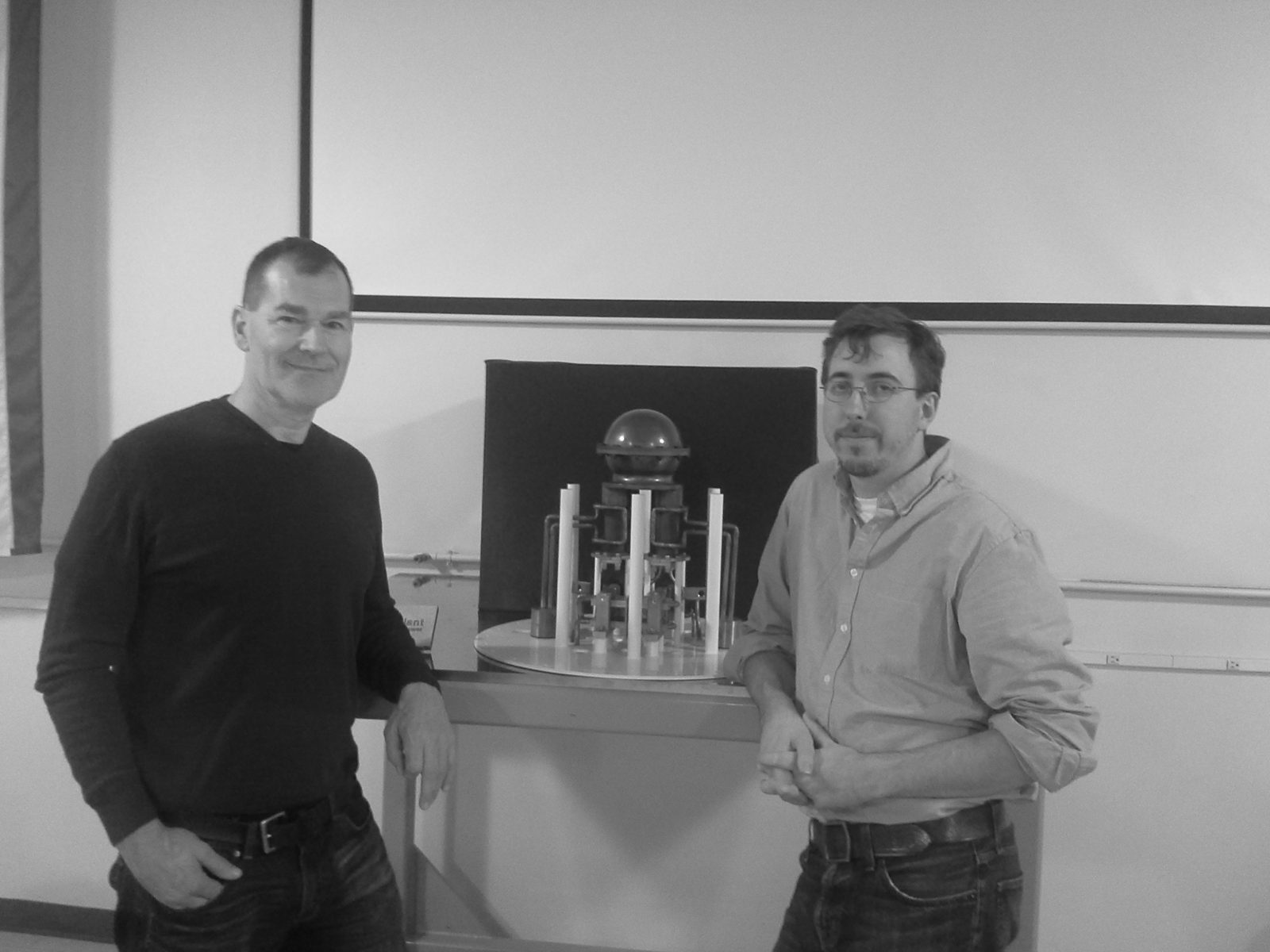
Brett Holverstott, author of The End of Fire

The author

Brett Holverstott

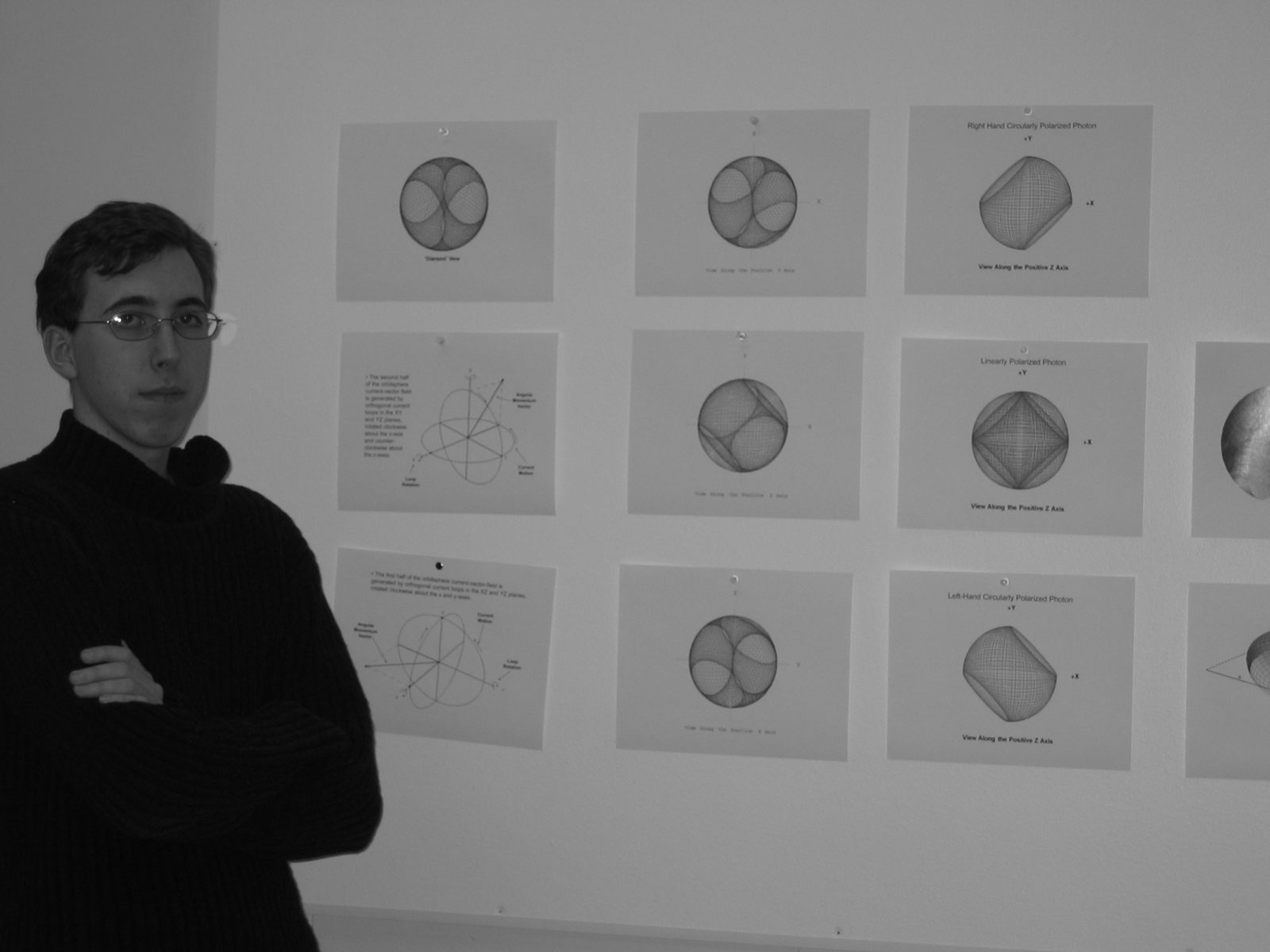
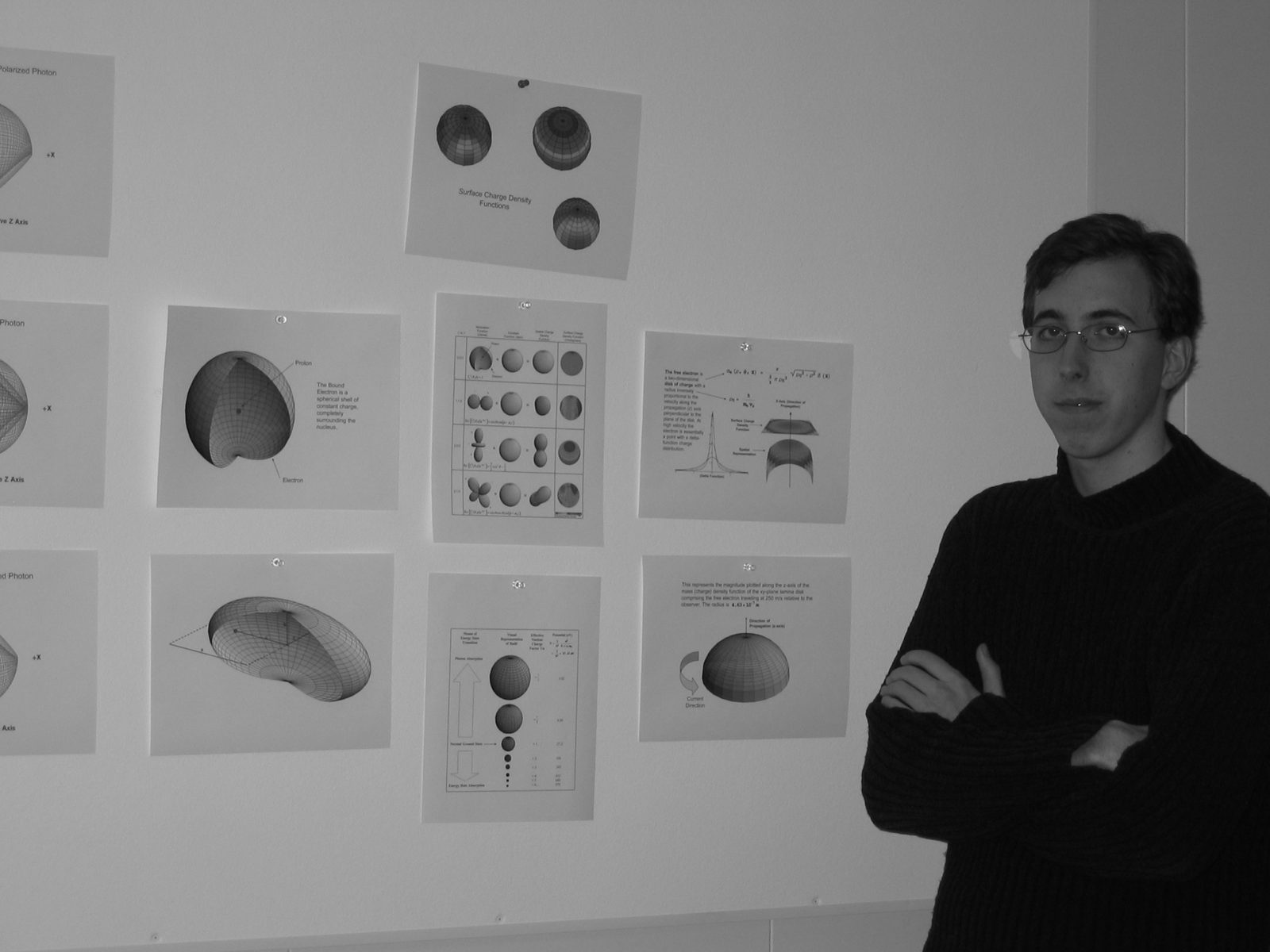
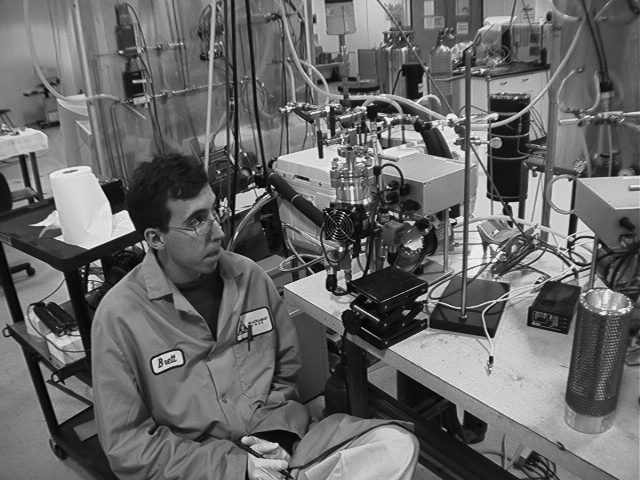
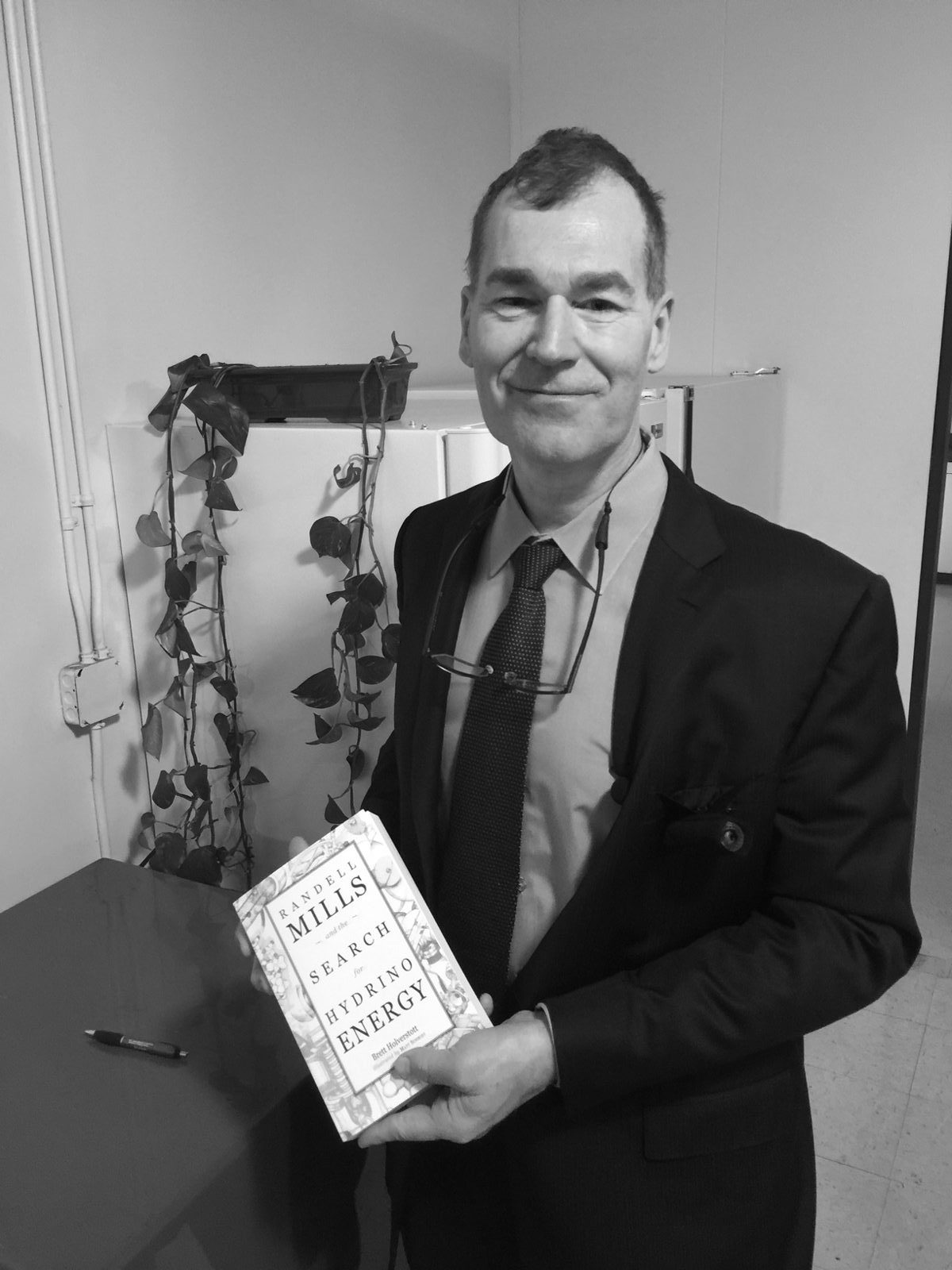
Brett studied philosophy, physics, and chemistry at Reed College. He worked with Mills from 2004–2009, doing scientific visualizations and mathematical support. In 2016 he published Randell Mills and the Search for Hydrino Energy; the second edition released in 2025 as The End of Fire. He hosts Profane Science, a reader-supported podcast. He also holds a Masters in Architecture and is a practicing architect in Seattle with the Figure Ground Collective. His next book is about the art world; learn more via Profane Art.

Contact

Write to the author

Questions about the physics, speaking invitations, interview requests, classroom use. Every message is read.